
Tournevis d’horlogerie : outils destinés aux vis de réglage et aux axes.
Pince universelle de petite taille : pour l’extraction des axes rétifs.


Pince à dégager les ressorts : outil spécifique pour l’extraction des ressorts aiguilles.


Lame de rasoir traditionnel (type rasoir de sécurité) ou scalpel de médecin: pour l’arasage de précision des lièges.

Consommables et matériaux de rechange


Ressorts de rechange : assortiment de ressorts aiguilles et plats pour remplacement.

Produits d’entretien, de lubrification et d’étanchéité
.


Acétone : pour l’élimination de la colle sur les doigts
Papier abrasif de granulométrie extra-fine (grain 600) : pour l’ajustement des lièges tenon et le traitement de l’oxydation des axes.


Matériel de nettoyage et de dépoussiérage


– Mouchoirs jetables ou papier absorbant : pour l’essuyage des composants et le séchage des tampons.

Inventory of precision tools and consumables.
Here is a short, non-exhaustive list of tools and equipment you may need to maintain your instrument during your life as an oboist (see the illustrations in the French version):
Watchmaker’s screwdrivers: tools designed for adjustment screws and pins.
Small universal pliers: for removing stubborn pins.
Octave box removal tool: specialized tool (available on the “Toutpourlehautbois” platform or Oboe-Shop.de; approximate cost of 40 €)
Spring removal pliers: a specific tool for removing needle springs.
Spring hook (push-pull tool): or, if unavailable, a 1-mm-diameter sewing hook for reinserting the springs into their tabs.
Small sewing scissors: for cutting strips of cork, etc.
Traditional razor blade or surgical scalpel: for trimming the contact and stop corks.
Consumables and replacement parts
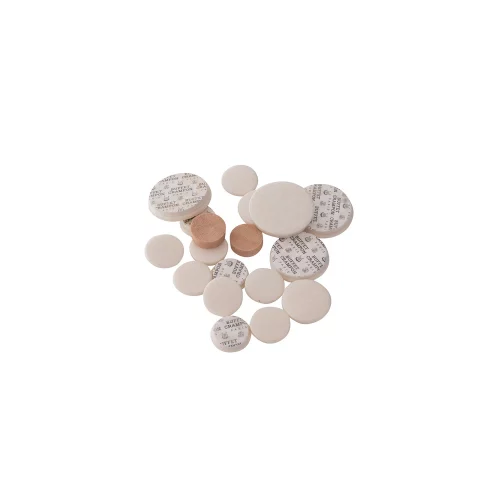
Cork sheets of varying thicknesses and densities: The use of agglomerated (reconstituted) cork is technically required for contact and stop corks due to its superior mechanical strength and durability compared to natural cork.
Selected cork stoppers: for shimming or emergency replacement of a pad.
Replacement springs: assortment of needle and flat springs for replacement.
Maintenance, lubrication, and sealing products
Synthetic mechanical oil with medium to high viscosity: lubricant suitable for axles and key tubes (Hetman No. 16 or No. 17).
Vaseline: lubricant in a jar (available at drugstores or pharmacies) for octave bowls and chimneys and other keyholes that are often damp.
– Fast-curing liquid adhesive: REPAR-EX-type cyanoacrylate adhesive for sealing cracks and instantly bonding contact and stop corks (store in the refrigerator).
Acetone: for removing glue from your fingers
Extra-fine sandpaper (600-grit): for adjusting tenon corks and treating oxidation on the pins.
Polishing cloth: a cleaning cloth for restoring the silver finish.
Cleaning and dusting supplies
Swabs (or feathers): for regularly drying the bore.
Fine brush (makeup brush type): for removing dust lodged under the keyholes.
– Disposable tissues or paper towels: for wiping down the rods and removing residual oil.
Rod with threaded end: a tool designed for the mechanical removal of textile swabs that are stuck inside the bore of the upper body by pulling them out.
- Uhrmacherschraubendreher: Präzisionswerkzeuge für Stellschrauben und Spitzschrauben (Achsen).
- Kleine Kombizange (Universalzange): Zum Herausziehen festsitzender Stahlachsen.
- Oktavkessel-Schlüssel: Spezialwerkzeug zum Ausbau der Oktavkessel (erhältlich auf der Plattform „Toutpourlehautbois“ oder bei Oboe-Shop.de, Preis ca. 40 €).
- Federausdrückzange: Spezialwerkzeug zum Entfernen abgebrochener Nadelfedern aus den Böckchen.
- Federhaken (Zieh- und Drückwerkzeug): Oder ersatzweise eine feine Häkelnadel mit einem Durchmesser von 1 mm, um herausgesprungene Federn wieder in ihre Federhaken einzuhängen.
- Kleine Schneiderschere: Zum Zuschneiden von Korkstreifen usw.
- Herkömmliche Rasierklinge oder medizinisches Skalpell: Zum präzisen Zurechtschneiden der Kopplungs- und Anschlagkorke.
- Korkplatten in verschiedenen Stärken und Dichten: Die Verwendung von Presskork(rekonstituiertem Kork) ist für Kopplungs- und Anschlagkorke technisch erforderlich, da er im Vergleich zu Naturkork eine deutlich höhere Druckfestigkeit und Langlebigkeit aufweist.
- Ausgesuchte Naturkorken (Korkstopfen): Zum Unterlegen oder für den Notfall-Ersatz eines Polsters.
- Ersatzfedern: Sortiment an Nadel- und Blattfedern für den Austausch.
- Synthetisches Klappenöl mit mittlerer bis hoher Viskosität: Geeignetes Schmiermittel für Stahlachsen und Klappenröhrchen (z. B. Hetman Nr. 16 oder Nr. 17).
- Vaseline: Schmiermittel im Tiegel (erhältlich in Drogerien oder Apotheken) für die oft feuchten Oktavkessel, Oktavkanäle und andere anfällige Tonlochbereiche.
- Schnell aushärtender Flüssigkleber: Dünnflüssiger Cyanacrylat-Klebstoff (z. B. REPAR-EX) zum Abdichten von Holzrissen und zum Sofortkleben von Kopplungs- und Anschlagkorken (im Kühlschrank aufbewahren).
- Aceton: Zum Entfernen von Klebstoffresten an den Fingern.
- Schleifpapier mit extrafeiner Körnung (Körnung 600): Zum Anpassen der Zapfenkorke und zum Polieren oxidierter (angerosteter) Stahlachsen.
- Silberpoliertuch: Pflegetuch zum Aufpolieren der Versilberung.
- Seidenwischer (oder Naturfedern): Zum regelmäßigen Trocknen der Innenbohrung.
- Feiner Pinsel (ähnlich einem Kosmetikpinsel): Zum Entfernen von Staub, der sich unter den Klappen angesammelt hat.
- Einwegtaschentücher oder saugfähiges Papier: Zum Abwischen der Achsen und zum Aufnehmen von Ölrückständen.
- Wischer-Extraktor (Stange mit Gewindespitze): Spezialwerkzeug zum mechanischen Herausziehen festsitzender Reinigungswischer aus der Innenbohrung des Oberstücks.
Inventario degli utensili di precisione e dei materiali di consumo.
- Cacciaviti da orologiaio: utensili destinati alle viti di regolazione e agli assi.
- Pinza universale di piccole dimensioni: per l’estrazione degli assi ostinati.
- Chiave per scatole d’ottava: utensile specializzato per smontare gli ugelli dei portavoce (disponibile sulla piattaforma «Toutpourlehautbois» o su Oboe-Shop.de, costo approssimativo di 40 €).
- Pinza estrattiva per molle (pinza cacciamolle): attrezzo specifico per l’estrazione delle molle ad ago.
- Tiramolle (uncino per molle): oppure, in mancanza di questo, un micro-uncinetto da merceria del diametro di 1 mm per riposizionare le molle nei rispettivi ganci di fermo.
- Forbici da cucito di piccole dimensioni: per il taglio delle strisce di sughero ecc.
- Lama di rasoio tradizionale o bisturi medico: per il taglio di rifinitura dei sugheri di contatto e di battuta.
- Lastre di sughero di vari spessori e densità: l’uso del sughero agglomerato (ricostituito) è tecnicamente necessario per i sugheri di contatto e di battuta, data la sua maggiore resistenza meccanica e durata rispetto al sughero naturale.
- Cuscinetti in sughero selezionati: per la sostituzione d’urgenza di un cuscinetto usurato o danneggiato.
- Molle di ricambio: assortimento di molle ad ago e piatte per la sostituzione.
- Olio sintetico per chiavi a viscosità medio-alta: lubrificante adatto per perni e tubetti delle chiavi (ad es. Hetman n. 16 o n. 17).
- Vaselina: lubrificante in vasetto (disponibile in drogheria o in farmacia) per le cavità e i camini delle ottave e altri fori di risonanza spesso soggetti a umidità.
- Colla fluida a polimerizzazione rapida: colla cianoacrilica fluida di tipo REPAR-EX per sigillare crepe (fessurazioni) e per l’incollaggio istantaneo dei sugheri di contatto e di battuta (da conservare in frigorifero).
- Acetone: per rimuovere i residui di colla dalle dita.
- Carta abrasiva a grana extrafine (grana 600): per la regolazione dei sugheri del tenone e il trattamento dell’ossidazione degli assi.
- Panno per lucidare: panno specifico per ravvivare l’argentatura delle chiavi.
- Scovolini (o piume naturali): per l’asciugatura regolare della cameratura.
- Pennello sottile (tipo pennello da trucco): per la rimozione della polvere depositata sotto la chiavatura.
- Fazzoletti monouso o carta assorbente: per asciugare i perni e rimuovere l’olio residuo.
- Asta estrattiva con filettatura terminale: strumento destinato all’estrazione meccanica degli scovolini in tessuto incastrati, avvitandoli e tirandoli all’interno della cameratura del corpo superiore.
0 commentaires